
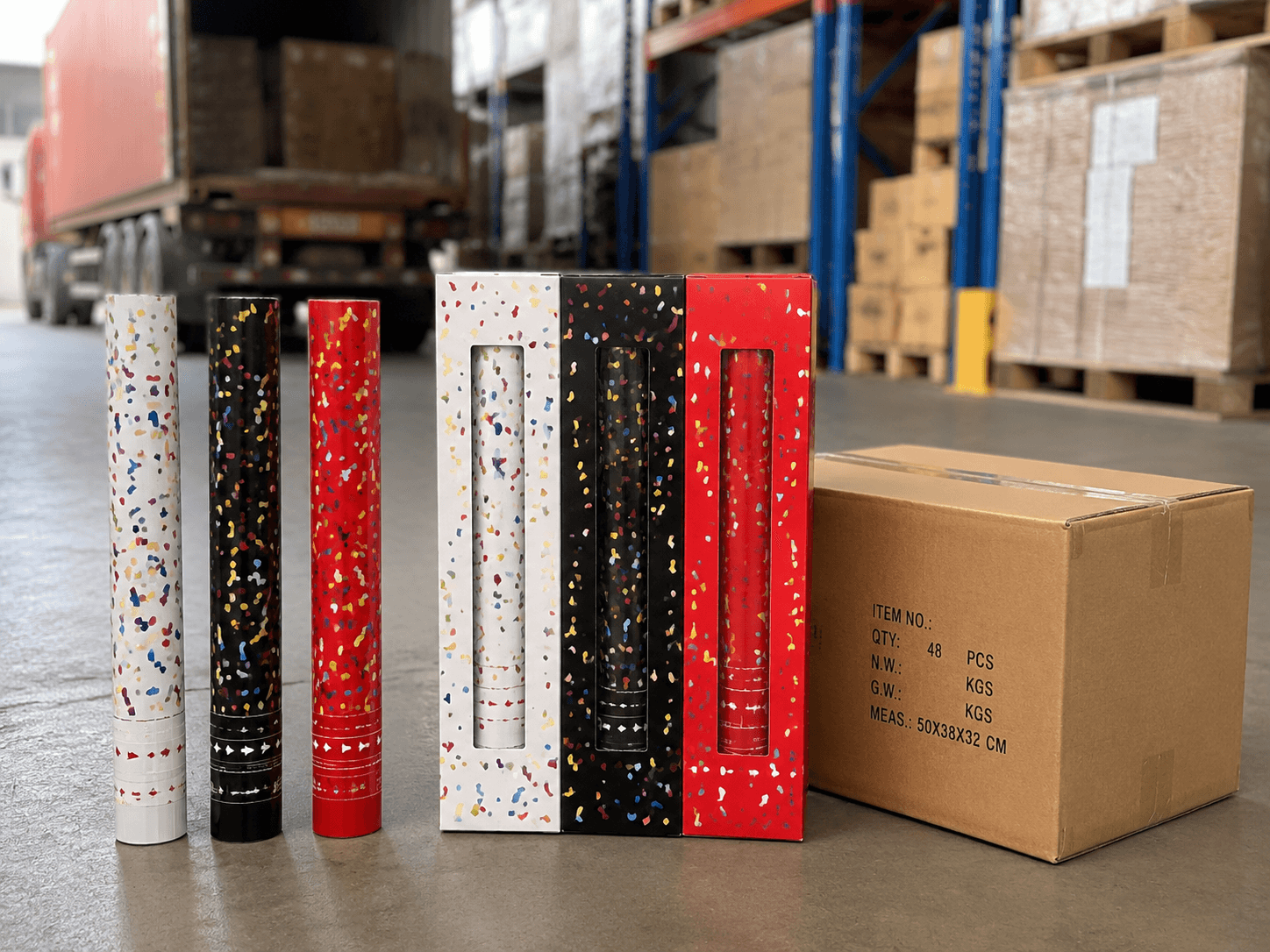
Are Confetti Cannons Dangerous Goods? A Shipping Guide for Importers

Ethan
AuthorWith experience in confetti cannon and party popper manufacturing and sales, we operate our own 20,000 sqm production facility with annual capacity exceeding 50 million units. We are specialists in handheld confetti cannons, electric confetti machines, party poppers, CO2 confetti blasters, and customized celebration products for events and retail.
For importers, distributors, event suppliers, and private-label buyers, shipping is often one of the first questions to solve before placing a confetti cannon order.
Are confetti cannons dangerous goods? The practical answer is: it depends on the product structure, propulsion method, transport route, carrier requirements, and destination market. A product that is suitable for one shipping arrangement may require a different review when sent by air, sea freight, courier, or through a specific country.
Before requesting a quotation, buyers should confirm the intended product type, order quantity, destination, preferred shipping method, and any local compliance requirements. This helps avoid choosing a product that does not fit the planned logistics route or landed-cost target.
If you are still comparing product options, start with the ConfettiGo product range and identify whether you need standard handheld products, custom retail packaging, or a more specialized event-effect solution.
Why Shipping Classification Matters for Confetti Cannon Buyers
Shipping is not only about freight cost. It can affect product selection, packaging, lead time, carrier availability, sample delivery, and the documents requested during the order process.
For a wholesale buyer, the right questions are usually:
- Is this product suitable for the intended transport method?
- Does the structure require a special logistics review?
- Can the supplier support suitable packaging for export?
- Which product options are easier to include in a mixed order?
- What should be confirmed before sending samples or booking freight?
- Does the destination market have special import, safety, labeling, or event-use requirements?
The earlier these questions are answered, the easier it is to compare product options and build a reliable sourcing plan.
A buyer looking for standard party products may have very different shipping needs from an event company sourcing higher-impact equipment. That is why “confetti cannon shipping” should be considered during product selection, not only after the order is confirmed.
Product Structure Is the Starting Point
Not all confetti products work in the same way. Product structure, launch mechanism, size, filling material, and intended use can all influence how a carrier or logistics provider evaluates a shipment.
For example, buyers may be considering:
- Manual twist confetti cannons
- Hand-pull confetti products
- Hand-thrown streamers or paper confetti
- Spring-based party poppers
- Electric confetti equipment
- Products designed for special visual effects
- Customized products with different packaging or filling options
Manual and hand-operated products are often a practical starting point for buyers who want to discuss easier shipping options and controlled landed costs. You can review available handheld confetti cannon options before deciding which products fit your channel.
However, product type alone is not a final shipping classification. Buyers should provide the product name, product photos, quantity, destination, and preferred transport method so that the supplier and logistics provider can review the most suitable arrangement.
Air Freight, Sea Freight, and Courier Shipping Are Not the Same
A common mistake is assuming that a product acceptable for one route will automatically be accepted by every carrier or transport method.
Each shipping method has different practical considerations.
| Shipping Method | What Buyers Should Confirm |
|---|---|
| Express courier | Sample size, destination availability, carrier requirements, packaging, product details |
| Air freight | Product structure, carrier review, documentation needs, destination rules, timing |
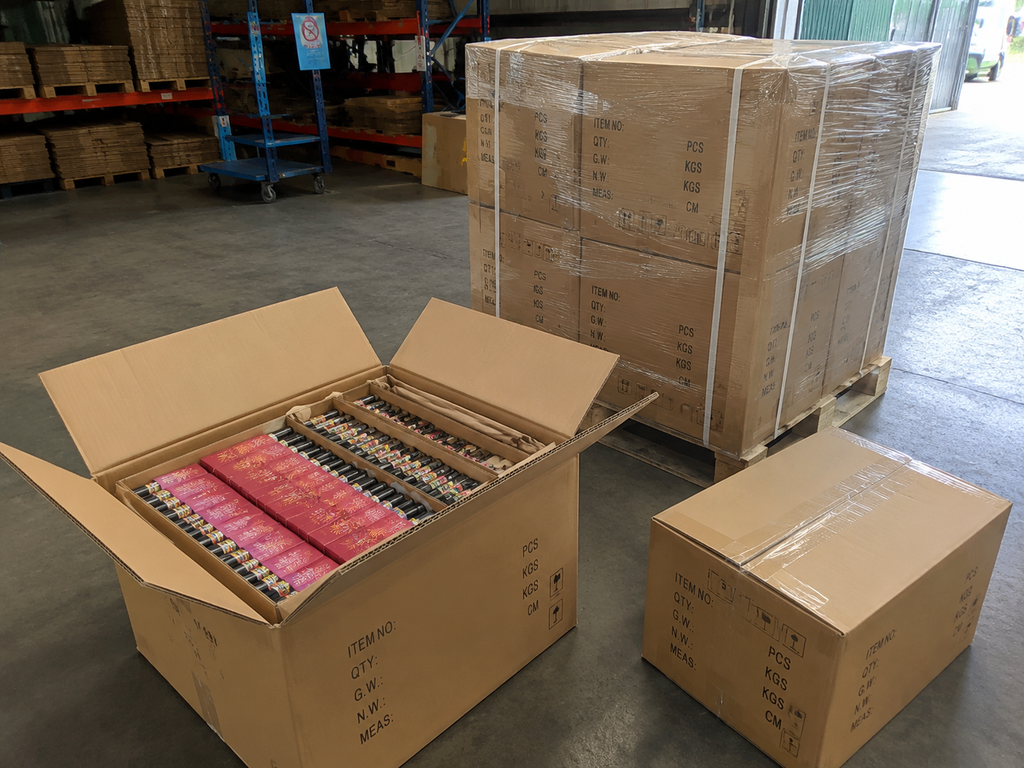
| Sea freight | Container or LCL planning, outer cartons, palletization, lead time, port handling |
| Consolidated shipment | Compatibility with other products, carton dimensions, packaging protection, freight booking plan |
| Local warehouse delivery | Destination labeling, carton marks, retail packaging, delivery appointment requirements |
For first orders, it is useful to ask for a shipping review before finalizing the product mix. This is especially important when combining different product types in one order.
A simple way to start is to tell the supplier:
We are importing to [country/port]. We need [product type], estimated quantity [quantity], and prefer [air/sea/courier]. Please recommend suitable options and advise what information is needed for freight planning.
This gives the supplier enough context to recommend products based on your commercial requirements instead of making assumptions.
How to Choose Easier-Shipping Product Options
For many first-time importers, the best option is not necessarily the strongest visual effect. It is often the product line that better matches the target market, channel, budget, storage conditions, and logistics capability.
Buyers who want a simpler starting point often prioritize:
- Standardized manual products
- Compact retail-friendly packaging
- Products suitable for mixed wholesale orders
- Clear size and carton information
- Filling options appropriate for the target market
- Products with practical repeat-order potential
- Customization options that do not create unnecessary complexity for the first order
For distributors, retailers, and wedding-supply buyers, a focused product assortment can be more effective than importing too many unrelated products at once.
A useful first order may include several compatible handheld products, selected filling options, and retail packaging formats rather than a large range of specialized items. Review all wholesale confetti product categories to compare the available options before building your first sourcing list.
What to Confirm Before Requesting a Freight Quote
A freight quote becomes more useful when the buyer provides complete information. “How much is shipping?” is not enough for a reliable answer.
Before requesting a quote, prepare the following:
| Information Needed | Why It Matters |
|---|---|
| Destination country and city/port | Determines available routes, carrier options, and import conditions |
| Product type | Helps identify the right logistics review and packing approach |
| Quantity and target order value | Affects carton count, shipment size, and shipping method |
| Preferred transport method | Helps compare air, sea, courier, or consolidated shipment options |
| Standard or custom packaging | Custom packaging may affect carton dimensions and production timing |
| Delivery deadline | Helps determine whether sample, production, and freight timing are realistic |
| Target customer channel | Retail, event supply, e-commerce, and distribution may require different packaging |
| Product documents requested by your market | Allows the supplier to confirm available information before order confirmation |
If you are ordering custom products, also provide artwork requirements, packaging format, color preferences, and expected launch date. For private-label buyers, packaging confirmation should happen before mass production begins.
For more information about wholesale ordering, sample planning, MOQ, and customization, read the Confetti Cannon Manufacturer B2B Sourcing Checklist .
Samples Should Be Part of Your Shipping Plan
Samples are not only for checking appearance. They help buyers evaluate product suitability before a bulk order.
When reviewing samples, check:
- Product size and handling experience
- Filling material, shape, and color effect
- Tube or outer packaging quality
- Retail display suitability
- Carton protection requirements
- Product labeling needs
- Whether the product fits your planned customer channel
- Whether the shipping route and delivery timing are practical for your business
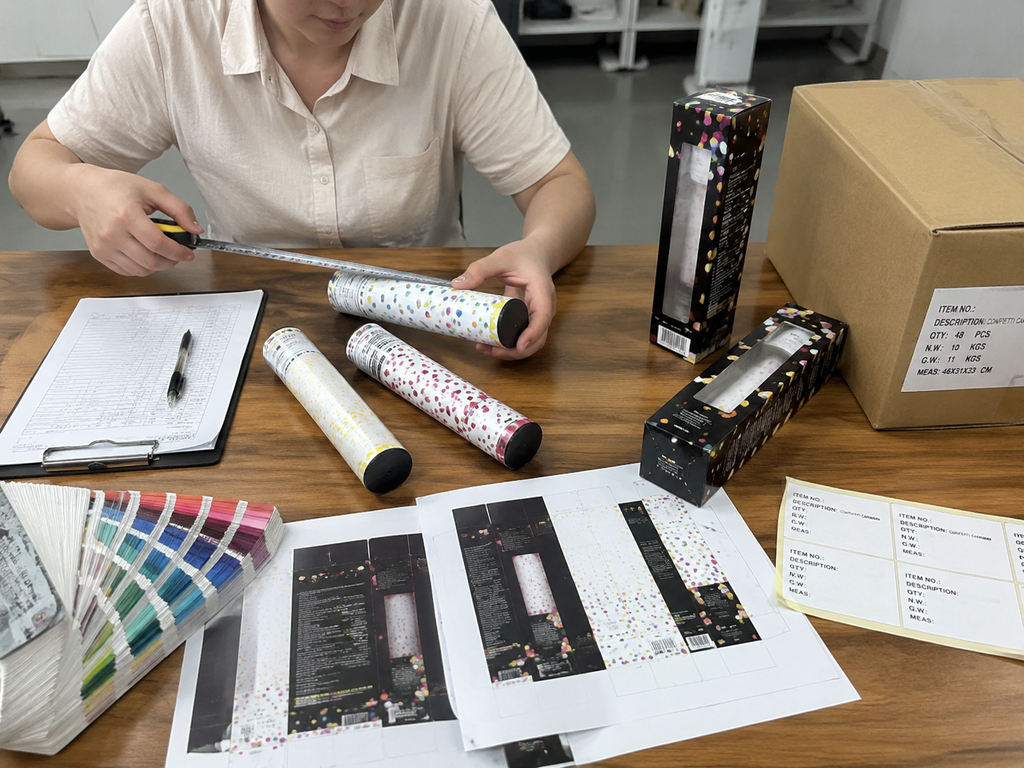
For a private-label project, sample approval should also include packaging artwork, brand placement, color references, barcode requirements, and carton marks where needed.
Do not wait until mass production is completed to ask fundamental questions about packaging or freight. At that point, changing the product mix, carton size, or shipping method may create delays and extra cost.
Shipping Questions to Ask Before Placing a Bulk Order
Before confirming a purchase order, importers should ask their supplier or logistics partner the following questions:
- Which of these product options best fits my intended shipping method?
- What product details do you need to review the logistics arrangement?
- What is the estimated carton size, gross weight, and packing method?
- Can standard products and custom products be combined in one shipment?
- Which items are best for a first trial order?
- What information should I provide for shipping to my destination?
- At what stage should I confirm packaging and shipping marks?
- What is the expected production time after sample or artwork approval?
- Can you support product selection based on my target market and customer type?
- What should be confirmed before final freight booking?
These questions help buyers create a more stable import process and reduce avoidable uncertainty.
A Practical Starting Point for New Importers
New buyers do not need to begin with the largest possible order or the widest product range.
A practical approach is to:
- Select a focused product category.
- Confirm the target customer and sales channel.
- Choose standard or low-complexity packaging for the first order.
- Review samples before finalizing the product mix.
- Confirm MOQ, production timing, carton details, and shipping route.
- Expand into OEM packaging, special filling options, or additional product types after the first order process is validated.
This approach is especially useful for distributors, party-supply retailers, event suppliers, and private-label brands that want to test demand without creating unnecessary supply-chain complexity.
If you are unsure which products fit your market, visit the Wholesale FAQ for common questions about product selection, MOQ, customization, and shipping considerations.
Request a Shipping Suitability Check for Your Market
Every market, product mix, and transport route is different. The most useful next step is to share your destination, preferred product type, estimated order quantity, customer channel, and expected delivery timeline.
ConfettiGo can help buyers review suitable product options, customization requirements, packaging considerations, and practical starting points for wholesale purchasing.
Contact our team to request a shipping suitability check for your market, discuss your product requirements, or plan a sample and bulk-order process.
Frequently Asked Questions
1.Are all confetti cannons dangerous goods?
No. Shipping treatment depends on the product structure, propulsion method, carrier requirements, transport route, and destination market. Buyers should confirm the exact product and shipping plan before placing an order.
2.Can confetti cannons be shipped by air?
This depends on the specific product, carrier requirements, destination, and available logistics arrangement. Buyers should provide product details and destination information before requesting an air-freight plan.
3.What products are easier for a first wholesale order?
Many buyers begin with standard handheld or manual products, practical packaging formats, and a focused product assortment. The best choice depends on the sales channel, budget, customer type, and shipping plan.
4.Can I mix different confetti products in one order?
This depends on the selected products, packaging, order quantity, and shipment arrangement. Confirm the product mix and carton details before finalizing the purchase order.
5.When should I ask about freight?
Ask during product selection and before order confirmation. Freight planning is more accurate when the supplier knows the product type, quantity, destination, packaging format, and preferred delivery method.
Related News
Other news you might be interested in
Hand-Twist Confetti Cannon Safety: What EU, UK and US Buyers Should Verify
Before purchasing hand-twisted confetti cannons, buyers shall verify product specifications, target market requirements and supporting documents. This document provides a procurement review checklist covering EU and US market requirements, test report and model matching, packaging labelling, user instructions, sample changes and shipment confirmation. It helps importers and wholesalers identify evidence gaps, clarify supplier responsibilities, confirm final specifications and pending actions prior to order approval, and mitigate procurement and delivery risks.
Wholesale Handheld Confetti Cannons in 2026: A B2B Buyer’s Guide to Smarter Sourcing
Source wholesale handheld confetti cannons with confidence. Compare product options, bulk pricing, customization, lead times, and supplier checks for B2B buyers.
Want to know more?
Get in touch with us for more information about our services and products.