
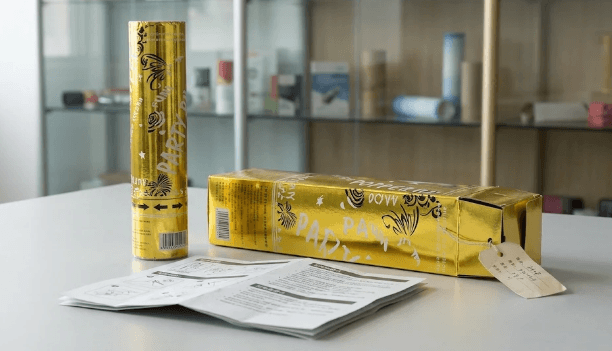
Confetti Cannon Sample Approval Checklist: What to Confirm Before a Bulk Order

Ethan
AuthorWith experience in confetti cannon and party popper manufacturing and sales, we operate our own 20,000 sqm production facility with annual capacity exceeding 50 million units. We are specialists in handheld confetti cannons, electric confetti machines, party poppers, CO2 confetti blasters, and customized celebration products for events and retail.
An approved sample is only useful when both sides know exactly what was approved.
A buyer may test one confetti cannon, like the effect and place a bulk order, then discover that the production carton uses a different filling mix, pack quantity, label version or instruction sheet. The product may still work, but it is no longer the item that was approved. For wholesalers, importers, event suppliers and private-label brands, a sample order should do more than answer “does it work?” It should create a written reference for the bulk order.
This guide explains how to build that record. It covers the product, filling, artwork and packaging decisions that need to match before a bulk order is released. It is a purchasing checklist, not a certification or safety approval.
Quick Sample Approval Checklist
Before approving a sample for bulk production, confirm that:
- The sample is identified by a model reference, sample type and date.
- The product, filling, pack format and artwork versions are recorded together.
- The buyer has tested the sample in conditions that reflect the intended sales channel or event use.
- Every visible difference has an owner, a next action and a status.
- The approval says what is approved, what is conditional and what is still open.
- The bulk order refers to the approved sample and specification, rather than to a photo or an informal message.
1. Start With the Buying Decision
The sample should answer the questions that matter to the buyer, not only whether the product works.
For a retail assortment, the buyer needs to know whether the product looks right on shelf, fits the planned price position, and can be sold in the intended pack. For an event supplier, the priority may be the visible effect, handling by staff or guests, venue suitability, and clean-up. For a private-label brand, the sample must also show whether the proposed artwork, label, and packaging direction can be produced consistently.
Write down the main buying decision before requesting samples:
- Who will sell or use the product?
- Which sales channel or event format is it intended for?
- Which product size and filling direction are being evaluated?
- Which packaging level is part of the decision?
- Which questions must be answered before a bulk order can be placed?
This keeps the sample order focused. A box of unrelated products may be interesting, but it is difficult to turn into an approval record. If the product range is still open, start with the handheld confetti cannon category and the filling type category, then choose a small set of products that represent the intended range.
2. Record What the Sample Is
“The sample” is not a sufficient reference. Two samples can look similar while differing in size, filling, pack quantity, label or instruction version.
Create a sample record that can be attached to the quotation and purchase order. At minimum, record:
| Sample detail | What to capture |
|---|---|
| Sample identity | Sample reference, supplier description and date received |
| Sample type | Stock sample, pre-production sample or another agreed type |
| Product model | Model reference and product name used in the quotation |
| Operating action | How the product is activated, described separately from its internal mechanism |
| Size and configuration | Product size and the configuration the sample is intended to represent |
| Filling | Material, shape, color or mix, and the unit used to describe the fill |
| Pack format | Single unit, multipack or another selling unit |
| Packaging level | Product packaging, inner pack, display pack or master carton |
| Artwork version | Label or printed-pack version shown on the sample |
| Documents supplied | Instruction sheet, artwork file, specification or other sample documents |
| Approval scope | Which markets, channels or order configurations the sample is meant to cover |
Mark unknown fields as unknown. Do not leave them blank and later assume they were approved. If the sample is a stock item, ask whether it represents the proposed bulk configuration or only the general product direction. If it is a pre-production sample, record what production batch or order it relates to, if that information is available.
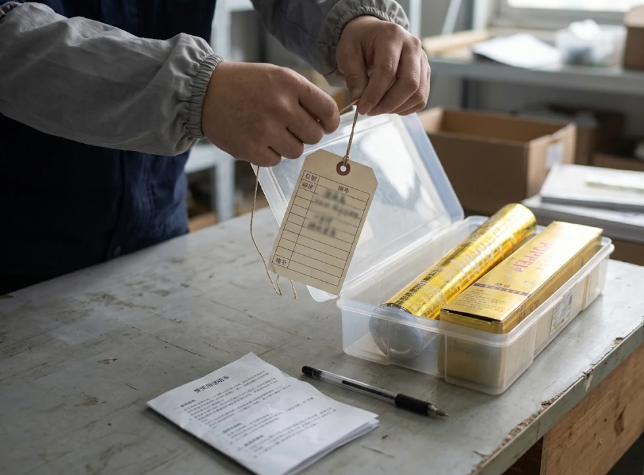
3. Separate Product, Filling, Artwork and Packaging Samples
Different samples prove different things. A physical product sample may show how a cannon operates, but it does not prove that a printed carton will match the approved artwork. A digital proof may show text and layout, but it cannot confirm the physical pack, material, or assembled dimensions.
Use separate approval points:
| Sample or proof | What it can help confirm | What it does not confirm by itself |
|---|---|---|
| Product sample | Model, operation, visible effect, handling and general finish | Production consistency, packaging print or document coverage |
| Filling sample | Material, color, shape, mix and how the filling is described | Performance of the complete product or suitability for every model |
| Artwork proof | Wording, layout, hierarchy and color intent | Physical substrate, print result, label fit or pack assembly |
| Packaging sample | Pack structure, label placement, unit count and how the pack presents | Product effect or the contents of every production unit |
| Pre-production sample | The combined product, filling and packaging configuration before bulk release | Certification, regulatory approval or performance of every later unit |
If the buyer needs a combined approval, ask for a pre-production sample that represents the intended product and pack together. Record which parts are final and which are still mock-ups.
For custom fillings and packaging changes, use the custom paper confetti guide to define the material, shape, color and pack details before asking for a quotation.
4. Set Acceptance Criteria Before Testing
Acceptance criteria should be written before the sample is opened. Otherwise, the decision can drift toward whatever the sample happens to show.
Use criteria that can be observed or checked:
- The model and configuration match the written specification.
- The sample operates in the way described in the instructions.
- The visible effect is suitable for the intended channel or event.
- The product and pack are free from damage that would affect sale or use.
- The filling, color and pack quantity match the approved description.
- The label and artwork version are identifiable.
- The instructions and documents supplied are the versions being reviewed.
- Open questions are recorded rather than resolved by assumption.
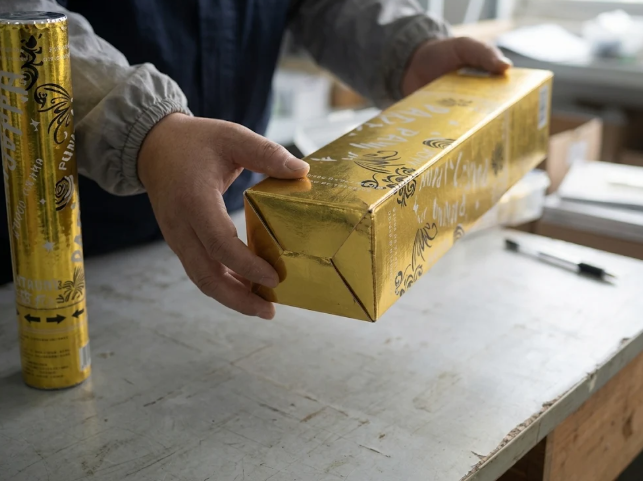
5. Test in the Intended Use Condition
A sample tested only on a desk answers fewer questions than one tested in the planned sales or event environment.
A retailer can place the sample on a shelf or display and ask intended buyers for feedback. A wedding supplier can test it during a styled photo session. A bar or venue can check visibility under its lighting. An event company can compare handling across different areas of a venue. Record the conditions, because a result from one setting should not be presented as a result for every setting.
Useful records include:
- The date and place of the test.
- Who operated the product and whether they had used it before.
- The product size, filling and quantity used.
- The lighting, indoor or outdoor setting and approximate space.
- Photos or video of the effect and the pack.
- Any handling difficulty, damage or instruction question.
- Clean-up observations for the intended venue.
- Whether the venue or organizer has any relevant conditions.
Operate the sample only as the supplied instructions allow. If the product cannot be tested safely in the intended setting, record it as untested and ask for the missing information. Do not open, refill or modify a finished cannon to create a test that the supplier has not authorized.
One sample cannot prove that every production unit will be identical. The approval record should therefore distinguish between “this sample was accepted” and “the bulk order will be checked against this reference.”
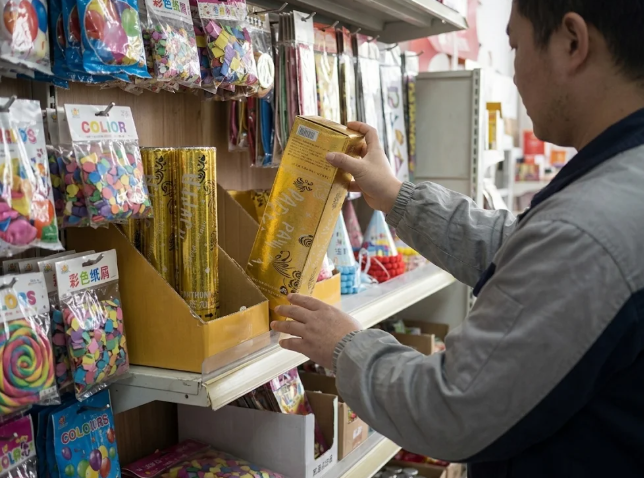
6. Compare the Sample With the Bulk Offer
The quotation should describe the same configuration as the sample. Compare them side by side before approving.
| Check | Sample record | Bulk offer or specification |
|---|---|---|
| Product and model | Model reference and description | Same model reference in the quotation |
| Filling | Material, shape, color and mix | Same filling description and unit |
| Selling unit | Single, multipack or other pack | Same pack definition and units per pack |
| Carton data | Pack and carton arrangement shown or stated | Units per carton, dimensions and weight, where available |
| Packaging | Packaging level and artwork version | Same level and version in the order |
| Documents | Instruction and specification versions supplied | Versions that will apply to production |
| Commercial terms | Sample terms and any stated conditions | MOQ basis, sample charge or credit, delivery basis and timing |
| Inspection | What was checked on the sample | What will be checked before shipment |
Ask directly whether the sample charge is separate, refundable or credited against a bulk order. Do not assume a credit or a free sample unless it is stated in writing. The same applies to sample delivery costs, minimum sample quantities and production timing.
For a consistent cost comparison, use the confetti cannon quotation guide to compare the same unit, pack and delivery basis.
7. Record Differences and Approve in Writing
A sample review should end with a clear status, not a general comment such as “looks good.”
Use three outcomes:
- Approved: the recorded configuration can be used as the reference for the bulk order.
- Approved with conditions: the sample is acceptable only if listed changes or missing documents are completed before production.
- Not approved: the sample does not match the requirement, or the open questions are too significant to release the order.
The approval record should state:
- The sample reference and date.
- The exact product, filling, pack and artwork versions covered.
- The tests or checks completed.
- The differences found and the action agreed for each.
- The person or role approving for the buyer.
- The supplier confirmation reference.
- The conditions that must be met before bulk production.
- The date of the next review, if the approval is conditional.
Silence is not approval. A supplier message saying “no problem” is not a substitute for a written record when the change affects the product, filling, pack, artwork or documents.
If the model, filling, size, packaging or artwork changes after approval, treat the earlier approval as specific to the earlier configuration. Ask for a new sample or a documented assessment of the change. The need for re-testing, new artwork approval or revised documents depends on the change and should be confirmed by the responsible technical or commercial reviewer.
8. Hand the Approval to the Bulk Order
The final step is to make the approval usable by the people who place, produce, and check the order.
Attach the approved sample record to the purchase order or specification annex. Reference the sample ID, approved configuration, and artwork version. If a pre-production sample was agreed, state when it must be approved and what production, if any, may start before that approval.
The handover should also identify:
- Who will check the bulk order against the approved reference.
- Which points will be checked on the product, filling, pack and carton.
- Which documents and label versions must match.
- How differences will be recorded and who decides whether they are acceptable.
- What must happen if the supplier proposes a substitution.
Keep the approved sample, photos, specification and artwork files together. Label them with the approval date and version so that a later sample is not mistaken for the approved one. If the sample is used for a different market, channel or order quantity, check whether the earlier approval still applies.
Sample approval is separate from document review. It does not confirm that a test report covers the ordered model or that the product meets a destination market’s requirements. Use the hand-twist confetti cannon safety and test report guide for that separate check.
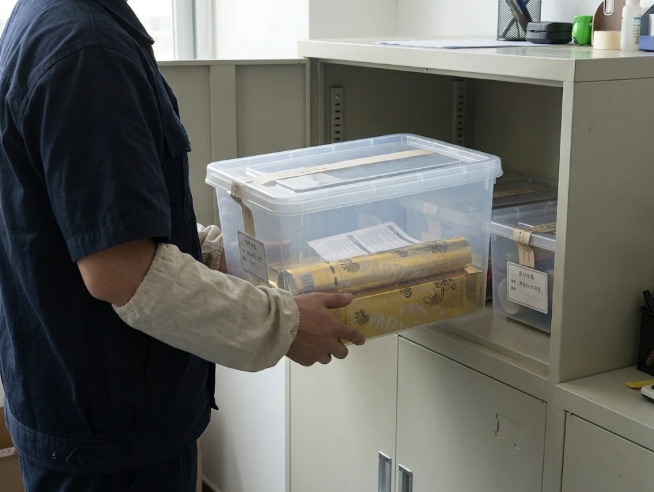
9. Send a Complete Sample Brief
A useful sample request gives the supplier enough information to propose a relevant product and a comparable pack. Include:
- Target market and sales channel.
- Intended event use or retail positioning.
- Product model, or the range you want to compare.
- Preferred filling material, color or effect.
- Selling unit and packaging level.
- Estimated bulk quantity and required delivery date, if known.
- Artwork, label language or private-label requirements, if applicable.
- The questions the sample must answer before you can approve a bulk order.
Send the brief through the ConfettiGo contact page and ask for the current sample options, written specification and commercial terms. A sample is most useful when it is tied to a clear buying decision and a record that can be checked again when the bulk order is placed.
Related News
Other news you might be interested in

What Is Confetti Paper? Custom Shapes & Wholesale Buying Guide
Purchasing custom paper confetti? Learn how to specify shapes, printing, packaging, and samples, and what to confirm before placing a wholesale order.
How to Compare Confetti Cannon Quotations: Unit Price, Carton Packing and Landed Cost
Compare confetti cannon quotations by cannon, pack and carton. Check packing, freight, Incoterms and landed cost before choosing a supplier.
Want to know more?
Get in touch with us for more information about our services and products.