
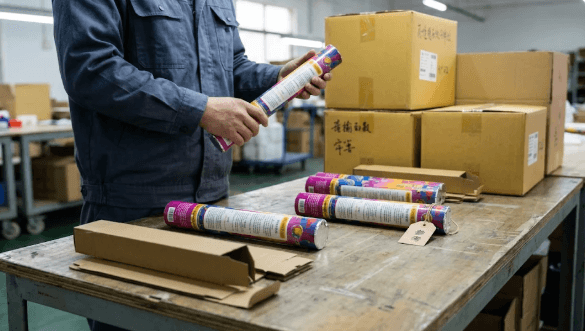
Confetti Cannon Pre-Shipment Inspection Checklist

Ethan
AutorMit Erfahrung in der Herstellung und im Vertrieb von Konfettikanonen und Party-Poppern betreiben wir eine eigene Produktionsstätte mit 20.000 m² Fläche und einer Jahreskapazität von über 50 Millionen Einheiten. Wir sind Spezialisten für handgehaltene Konfettikanonen, elektrische Konfettimaschinen, Party-Popper, CO2-Konfetti-Blaster und kundenspezifische Feierprodukte für Veranstaltungen und den Einzelhandel.
An approved confetti cannon sample gives a bulk order a reference. Pre-shipment inspection checks whether the finished goods match that reference before they leave the supplier.
For wholesalers, importers and private-label brands, the buying question is practical: does the shipment contain the agreed products, quantities and packaging, and what needs to be resolved before dispatch?
This confetti cannon inspection checklist covers the records, physical checks and decisions needed at that stage. It provides a framework to agree with your supplier and inspector; the exact tests, sampling plan and release conditions depend on the product and purchase contract.
1. Agree on the Inspection Scope Before Booking
Start with one identified order and a clear definition of the goods to be inspected. A shipment containing several models, fillings or packaging versions should not be treated as one interchangeable product.
Give the inspector:
- The purchase order and latest agreed specification.
- Approved sample references, photos and any recorded exceptions.
- Model, size, filling, color or mix, and selling-pack details for each item.
- Approved artwork, label and instruction versions.
- Ordered quantities, carton arrangement and draft packing list.
- The inspection checklist, sampling plan and acceptance criteria.
- The people authorized to resolve differences and release the shipment.
Freeze the reference versions before inspection. If the supplier proposes a substitute, identify the difference and obtain a decision rather than letting the inspector assume it is equivalent.
If those references are still incomplete, use the confetti cannon sample approval checklist to establish them first. Sample approval and inspection of the finished production lot serve different stages of the order.
2. Choose the Timing and Who Will Inspect
When the goods and packaging required for inspection are available, book the inspection and leave time to resolve any issues discovered. Inquire about the completion, packaging, and accessible content on the inspection date. Access to unfinished inventory cannot determine the packaging status that has not yet been applied.
Inspection during the production process may detect problems earlier, but it cannot determine the final quantity or packaging conditions. Record the available content and the content that needs to be checked.
Choose the inspection arrangement according to the order:
| Arrangement | When it may fit | What to confirm |
|---|---|---|
| Supplier inspection | You need the supplier's documented production and packing checks | Checklist, batch references, results and evidence supplied |
| Buyer-appointed inspector | Your team has product knowledge and needs direct verification | Site access, competence, time, equipment and reporting scope |
| Independent inspection company | You need an assessment by a separate provider | Product competence, safe test capability, scope, sampling and reporting terms |
A video call can help review visible details, but record what it cannot establish, including how units were selected and whether the whole lot was accessible.
Confirm access, readiness, fees and any reinspection arrangement before booking. If inspection is linked to a balance payment, put the sequence in the contract. An inspection result does not change the agreed payment terms by itself.
3. Check the Finished Goods Against the Order
Use the same product references throughout the checklist and report. Generic descriptions such as “wedding cannon” or “gold confetti” may not distinguish the ordered configuration from a similar item.
The inspection scope should cover the checks relevant to the order:
| Check | Compare against | Record in the report |
|---|---|---|
| Product identity | Model, size, activation method and configuration | Identification, measurements where agreed, and differences |
| Filling and visible effect | Approved material, shape, color or mix and effect reference | What was verified, how it was checked and any limitations |
| Workmanship and condition | Agreed finish and damage criteria | Defect description, affected units and photos |
| Quantity | Order lines and units per selling pack and carton | Counts checked, calculation basis and discrepancies |
| Labels and instructions | Approved wording, language, layout and versions | Missing, incorrect, unreadable or mismatched information |
| Retail packaging | Approved pack structure, appearance and unit count | Print, assembly, damage and presentation findings |
| Export cartons | Agreed packing, marks, dimensions and weight | Actual checks, carton references and visible condition |
Separate individual cannons, retail packaging, and main cartons in the quantity record. Multiply the number of cardboard boxes by the specified number of packaging to calculate the total number; Distinguish it from the actual units counted in the selected cardboard box.
For mixed orders, ensure that the agreed upon sampling plan covers different models and packaging versions. The result of one configuration should not be used as a check for all other configurations.
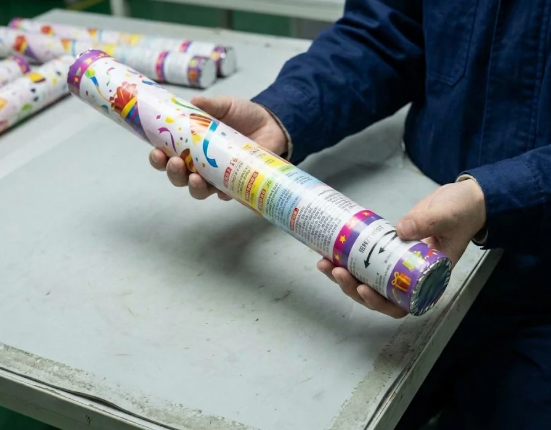
Check filling identity using the agreed specification and authorized verification method. Color alone does not establish the material or support a biodegradability or flame-retardancy claim.Do not open the finished cannon solely for the purpose of inspecting its contents unless approved by qualified technical reviewers.
4. Define Functional Tests and Sampling Separately
Visual inspection, operational testing, and document review answered different questions. The product may appear correct without testing; A successful demonstration does not prove that the entire batch is acceptable.
For any operational testing, it is necessary to reach consensus on the exact model, operator, location, equipment, instructions, and results to be evaluated. Handheld products, electrically fired confetti cartridges and reusable equipment each require their own applicable operating and test procedures. Only use methods and appropriate conditions allowed by the manufacturer. Record unavailable instructions or inappropriate testing conditions as limitations, rather than passing.
For disposable products, firing the device will consume it. Record which devices are used for testing and how to verify the remaining shipment quantity. Used test units must remain separate from sale stock.
Agree on a sampling plan before inspection. It should determine the batch, unit selection method, sample size for different inspections, defect definition, and acceptance or rejection rules. If the contract specifies an AQL based plan, please work with the responsible quality professionals to determine standards and versions, inspection levels, and other required parameters.
Do not select a fixed percentage or copy another product's AQL settings without assessing the order. As the NIST explanation of acceptance sampling describes, sampling supports a decision about accepting or rejecting a lot. It does not check every unit or guarantee a defect-free shipment.
Define how safety concerns and missing mandatory information will be escalated. They should not be treated as ordinary cosmetic findings simply to obtain a passing result.
5. Check Packaging and Documents for the Intended Channel
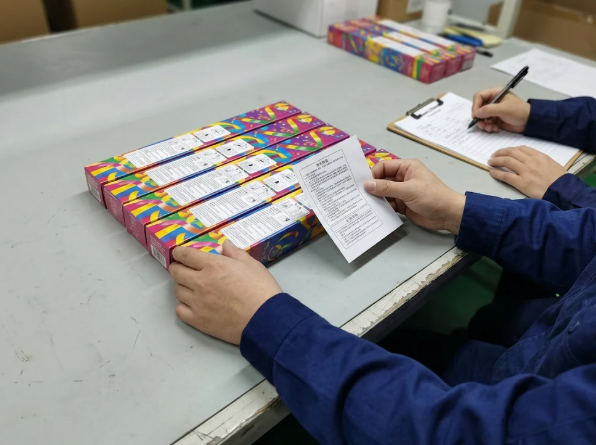
A product that matches the physical sample can still arrive with the wrong label, barcode or retail-pack version. Compare production packaging with the approved files and physical references, rather than relying on a supplier's general assurance that the artwork is correct.
Where relevant to the order, check:
- Product identification and expected label language.
- The readability and existence of the agreed instructions and warnings.
- The barcode readability and decoded number correspond to the approved project record.
- Packaging quantity, inserts, and any agreed display box layout.
- Carton marking, batch reference, and packing list link.
A barcode that scans is not necessarily the correct barcode. Likewise, an intact carton does not establish that its contents match the order.
SGS lists quality, quantity, packaging, labeling and shipping marks among the scope of its final random inspections. Use that as background when defining an inspection brief, while agreeing the actual scope for your product. It does not establish ConfettiGo's inspection policy.
Keep inspection separate from regulatory and transport review. Checking that a document is present does not establish that it covers the ordered model or destination. Use the confetti cannon safety and test-report guide for document coverage, and the shipping guide for importers for the separate logistics questions.

6. Make the Report Useful for a Release Decision
A useful report connects each result to an order requirement. It should identify the order, lot, inspection date, inspector, reference versions, production and packing status, sample selection and quantities checked.
For each finding, ask for the requirement, observed difference, affected model or carton, evidence and result under the agreed criteria. Photos should show enough context to identify the item as well as the detail being assessed.
Keep passed, failed and not checked distinct. If an operating test, label check or carton measurement could not be completed, state why and who will resolve it. A general “inspection passed” message should not conceal incomplete work.
The buyer's authorized decision-maker should then record one of these outcomes:
- Release: the agreed inspection conditions are met and any separate required approvals are in place.
- Hold for correction: specified problems need action and verification before dispatch.
- Accept a documented deviation: an authorized person accepts a defined, permissible difference within a stated scope.
A commercial deviation cannot waive applicable safety or legal requirements. Keep any unresolved technical issue with the responsible reviewer.
7. Verify Corrections and Hand Over the Shipment
If problems are found during inspection, identify the affected inventory and reach consensus on remedial measures, owners, deadlines, and verification methods. Distinguish between replacing the photographed samples and correcting the affected batches.
For reworked goods, keep a record linking them to the original finding. Confirm whether targeted checks or a wider reinspection are needed, and who bears the cost under the agreed terms. Record any effect on quantity, dispatch date and payment arrangements in writing.
After release, keep the final report, correction records, release authorization letter, and packing list together. If the loading evidence is part of the order, please specify the number of cardboard boxes or pallets, visible condition, and relevant shipping references for recording. Include container or seal number only when applicable. Unless otherwise specified in the inspection protocol, loading inspection is a separate scope.
Provide the final configuration, quantity, and carton reference to the receiving warehouse for comparison between delivery and shipping records. Pre shipment inspection and inspection of the condition of the goods upon arrival are separate.
Prepare Your Inspection Questions for ConfettiGo
Before confirming a bulk order, send ConfettiGo your product shortlist, destination market, quantity, pack format, approved sample references and planned dispatch date. State whether you intend to use your own inspector or an independent inspection company, and which checks you need.
Ask for written confirmation of the proposed inspection arrangements, available product instructions, batch identification, packing details and how findings would be handled. Confirm fees, correction or reinspection responsibilities, and any link to payment separately; these are order-specific terms.
Use the quotation comparison guide to keep inspection-related costs and payment conditions visible when comparing offers. Then contact ConfettiGo with the brief to ask what arrangements are available for your intended order.
Related News
Other news you might be interested in

Was ist Konfettipapier? Individuelle Formen & Großhandel-Einkaufsführer
Sie kaufen individuelles Papierkonfetti? Erfahren Sie, wie Sie Formen, Druck, Verpackung und Muster festlegen und was Sie vor der Aufgabe einer Großhandelsbestellung bestätigen sollten.
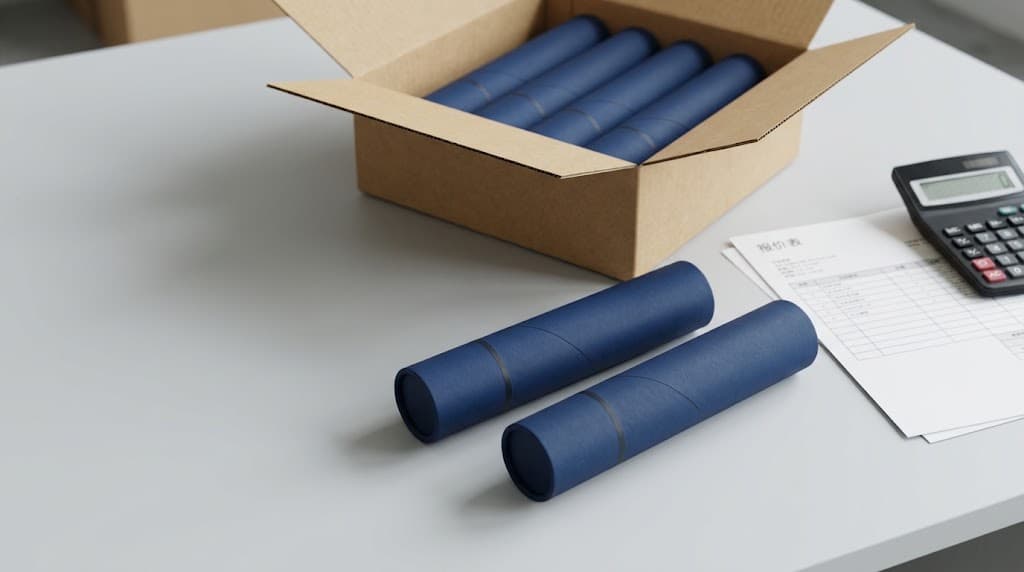
So vergleichen Sie Angebote für Konfettikanonen: Stückpreis, Kartonverpackung und Landed Cost
Vergleichen Sie Angebote für Konfettikanonen nach Kanone, Packung und Karton. Prüfen Sie Verpackung, Fracht, Incoterms und Landed Cost, bevor Sie einen Lieferanten wählen.
Want to know more?
Get in touch with us for more information about our services and products.